/sanskrit/
Sanskrit | संस्कृत
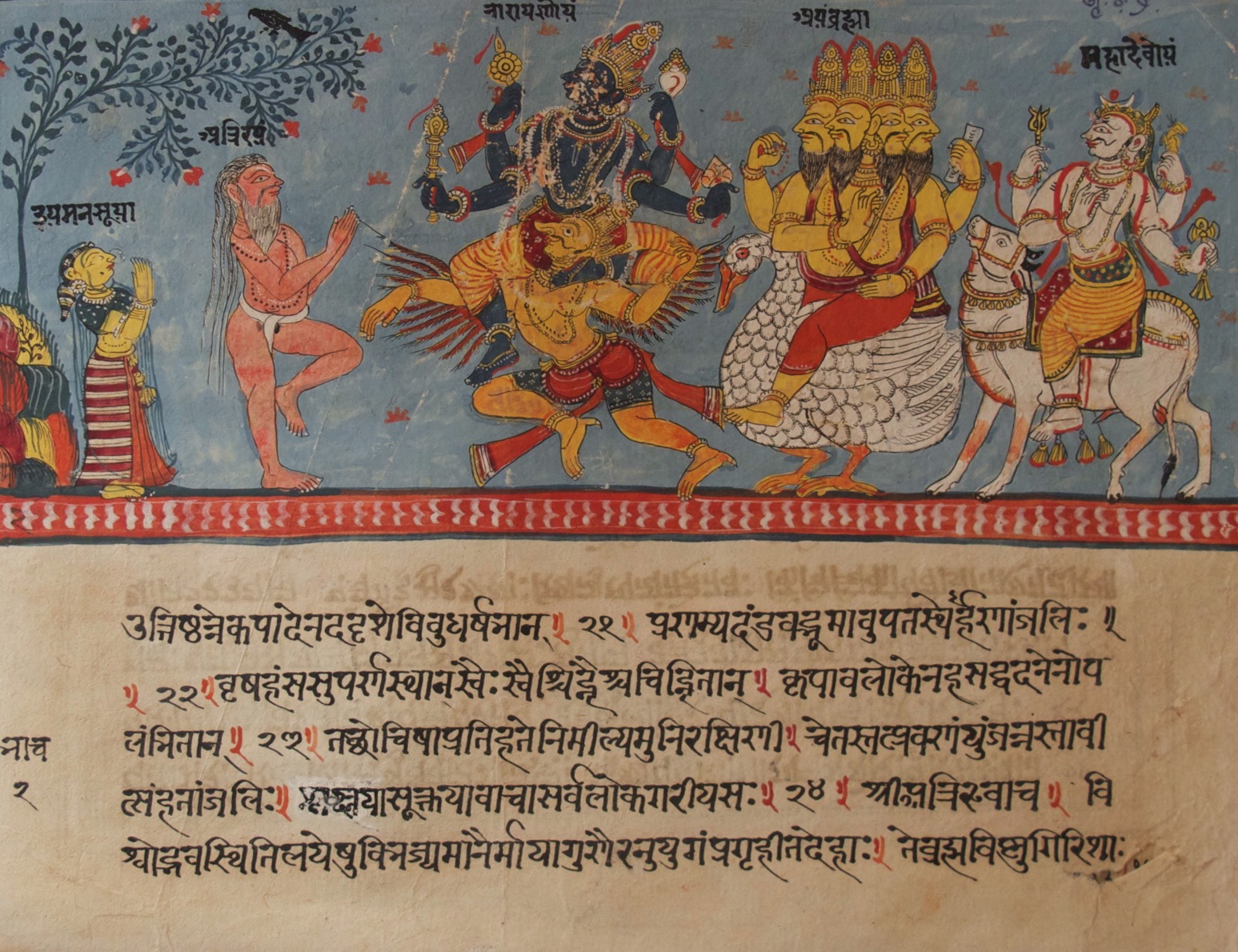
Sanskrit has been with me for most of my life. Long before I could read it, the sound of it reached me. As a child I found Sanskrit words and shlokas deeply soothing, and the beauty of the language never stopped amazing me. Learning it has been a lifelong pursuit, sometimes in the foreground, sometimes quietly in the background, but never quite gone.
How it started
I learned Hindi from the age of six, which gave me the Devanagari script and an ear for the sounds that Sanskrit and Hindi share. Between 1996 and 2000, I learned Sanskrit while attending Hindi classes offered by the Hindi Pracharini Sabha of Mauritius.
I owe that foundation to the Sabha (हिंदी प्रचारिणी सभा), and I remain very grateful to the teachers who gave up their weekends for us.
Picking it up again
Like many things learned young, Sanskrit drifted into the background once work and technology filled my days. Then, at the openSUSE Conference in Germany in 2023, a friend asked over dinner whether I still read Sanskrit texts. The question struck a chord. I wrote about that moment in Do you have a hobby?, and I have been reading Sanskrit again ever since.
Coming back to it as an adult has been a different experience. I read more slowly and more deliberately, and I find the same calm in the texts that I felt as a child. In a life spent around servers and code, it is the one practice that has nothing to do with computers, and that is exactly why I keep it.
Still learning
I do not consider myself fluent, and I am not sure I ever will be. Sanskrit rewards patience, and I treat it as a language to keep learning rather than one to finish. In this section of the blog I compile the resources that have helped me, in the hope that they help someone else discover the language.
Devanagari
Before one can pronounce Sanskrit words fluently, it is important to learn the Devanagari script and become familiar with the sound of each letter. The Unicode character code chart for Devanagari is useful not only for typing the script on a computer, but also as a compact reference for how each character is pronounced.
An introduction to Sanskrit
The Cambridge Introduction to Sanskrit by A. M. Ruppel offers a gentle introduction to the language and is suitable for anyone starting the journey. The textbook is available on Amazon, and further resources on Sanskrit and Devanagari are available from the author's website.
The Ashtadhyayi of Panini
The Ashtadhyayi of Panini is the foundational treatise on Sanskrit grammar and should be consulted by anyone wishing to read Sanskrit literature seriously. I recommend the six volumes of The Ashtadhyayi of Panini by Rama Nath Sharma, Professor at the University of Hawaii at Manoa. They provide a comprehensive study of Panini's work and point to many other materials on the subject.