/journal/pmi-chapter-of-mauritius/
What your appearance says before you speak — Lessons from PMI Mauritius
PMI Mauritius hosted an insightful session with Nadjma Rawat on professional image and personal branding. Learn how the "RAG project management framework" applies to grooming, clothing, and body language — and what your appearance says before you speak.

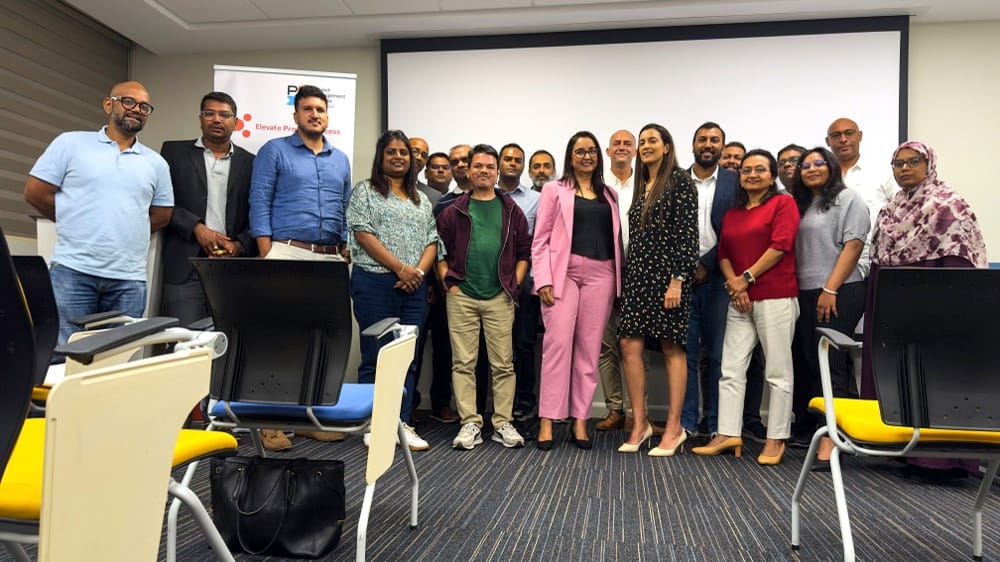
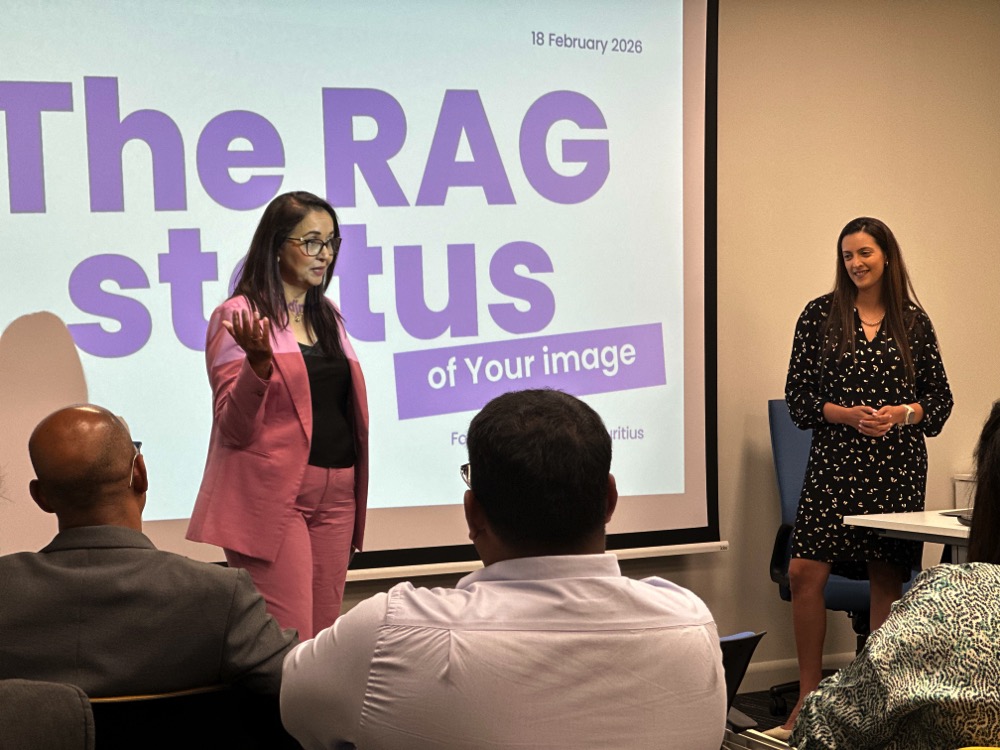
Today, around twenty of us gathered at Rockfin Training Institute in Ébène House for a PMI Mauritius Chapter meetup that turned out to be far more thought-provoking than a typical project management session. The theme: "The RAG Status of Your Professional Image: Engineering Authority and Influence."
The evening began with a warm welcome from Sareeta Nundloll-Goundan, President of PMI Mauritius, who introduced the speaker and noted that this was actually Nadjma Rawat's second time delivering her talk on grooming and personal branding at PMI Mauritius — a testament to how well it had been received the first time around.
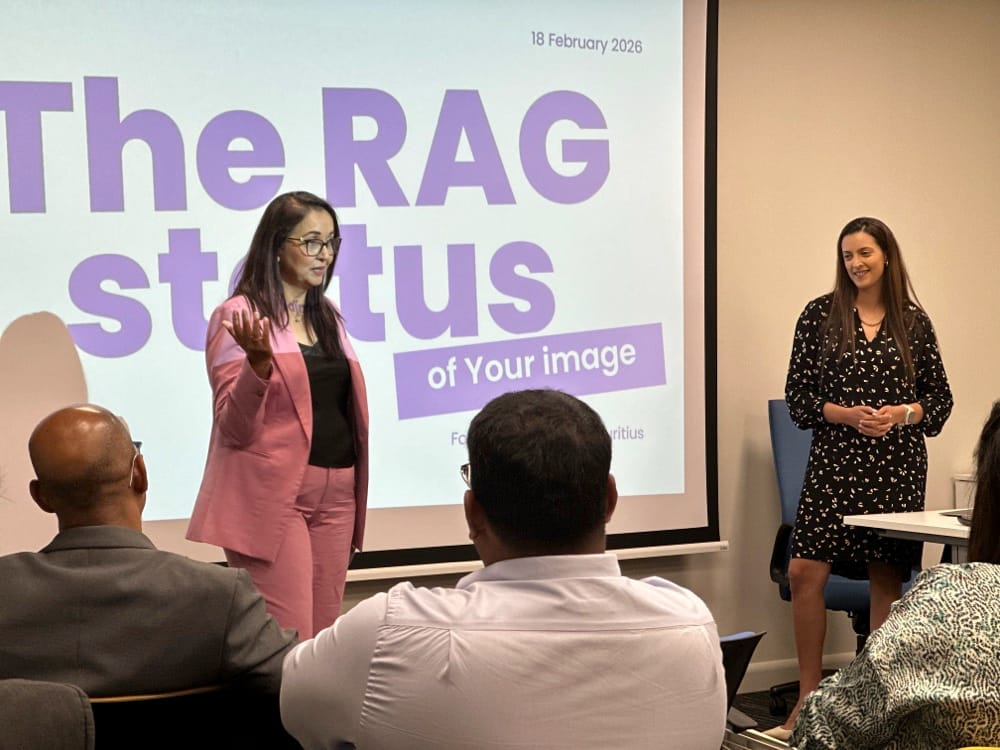
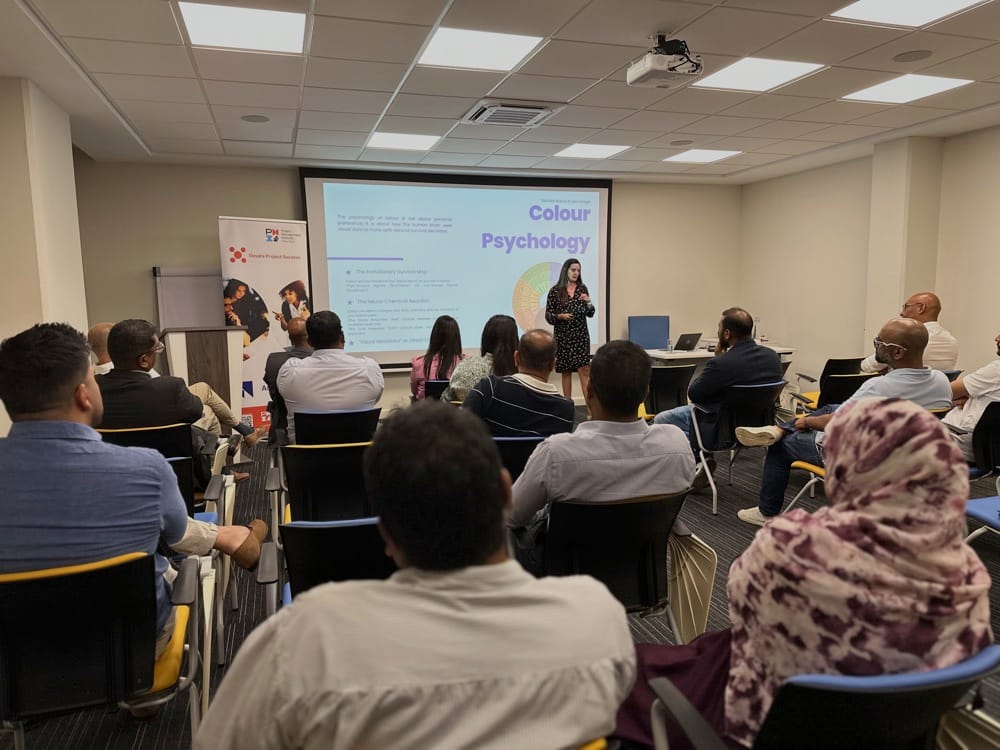
Nadjma wasted no time and opened with a simple game. She called out words like danger, calm, love, nature, and asked us to shout out the first colour that came to mind. The room responded almost in unison most of the time. It was a striking demonstration of how deeply colour is wired into our psychology before any rational thought kicks in.
That exercise set the stage for her core argument: colour perception changes body chemistry. The human brain processes visual data in milliseconds and makes snap judgements — about safety, competence, and trustworthiness — before a single word is spoken. This is what she called Visual Intelligence.
From Project Dashboards to People
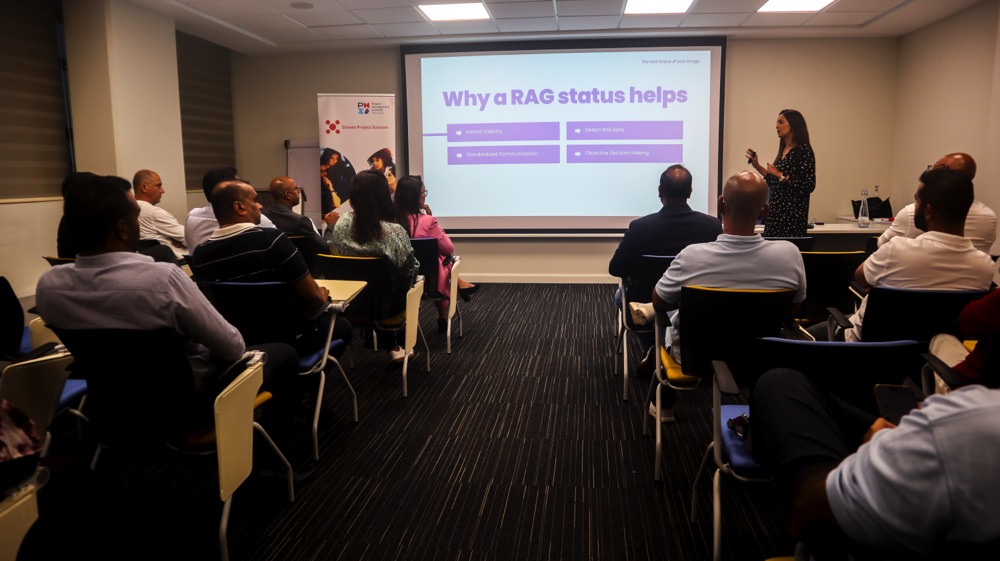
If you work in project management, you already know RAG status. Red, Amber, Green — the traffic light system used to communicate the health of a project's scope, schedule, and budget at a glance.
Nadjma's insight was to flip this framework inward. Your professional image is your personal RAG report. Stakeholders, clients, and colleagues are unconsciously reading you the moment you walk into a room or join a video call.
The slide she presented on Red Alerts made this concrete:
| Category | 🔴 Red (High Noise / Crisis) |
|---|---|
| Clothes | Wrinkled, stained, missing buttons, wrong fit |
| Footwear | Scuffed, dirty, worn-out soles |
| Grooming | Unmanaged hair, visible sweat, dirty nails |
| Body Language | Slumping, avoiding eye contact, closed arms |
| Auditory | Dangling jewellery, loudspeaker in open spaces |
| Digital | Cluttered video background, poor lighting |
| Emails & Presentations | Typos, no subject line, unnecessary Reply All |
And here's what made it land: she backed each category with a concrete impact figure.
| Category | Impact |
|---|---|
| Garment Care | −43% Competence perceived |
| Footwear | −30% Stability |
| Grooming | −25% Presence |
| Body Language | −40% Authority |
| Auditory signals | −20% Confidence |
| Digital background | −35% Trust |
| Emails & Presentations | −50% Efficiency |
The grooming point particularly stuck with me: "Poor grooming suggests you are a victim of the project's pressure rather than its manager." That framing is hard to argue with. 🤔
Clothing: Dressing with Intention
One of the most practical segments of Nadjma's session was on clothing — not fashion, but intentional dressing. The key principle she opened with: focus on how the clothes feel and move, not just how they look on the hanger.
The slide she showed contrasted two silhouettes side by side — one labelled Unintentional, the other Intentional. The difference wasn't expensive clothing. It was controlled fabric contrast, a cohesive colour family, and a silhouette that balanced the body. The unintentional look had mismatched textures, random colour temperature, and an uneven silhouette. Small details, massive difference in perception.
Fabric: The Breathability Test
Nadjma was direct about fabric choices: stick to cotton, linen-blends, and "Cool Wool." Avoid 100% polyester — it traps heat, creates sweat patches, and often has a cheap shine that reads as low quality under lighting, whether in a boardroom or on a video call.
Her practical tip before buying: scrunch a bit of the fabric in your hand for 5 seconds. If it bounces back, it's a high-twist fabric that resists wrinkles. If it stays creased, it will look creased by 10 a.m. on your most important day. 🤯
The Fit Rules
Fit matters more than brand. Nadjma shared two simple checks:
- The Shoulder Anchor — the seam of your shirt or jacket should sit exactly where your arm meets your shoulder. If it droops or pulls inward, the fit is wrong regardless of the size on the label.
- The One-Finger Rule — you should be able to slide exactly one finger comfortably between your shirt collar and your neck. Too tight reads as uncomfortable and anxious. Too loose looks careless.
From Red Alert to Green Zone ✅
The takeaway isn't that you need an expensive wardrobe or a perfect appearance. It's about intentionality. A Green status isn't flawless — it's in control. Clean clothes that fit, polished shoes, a tidy video background, structured emails with a clear subject line. These are all signals that say: I have my house in order, and I can manage yours too.
For PMs especially, this matters because you are often the first point of contact for senior stakeholders and investors. Your image is the dashboard they're reading long before your project plan is ever opened.
A Different Kind of (Personal) Project to Manage
Lesson learned from Nadjma's session is that managing your professional image isn't vanity — it's stakeholder communication. Every detail you present visually is data that people are processing, consciously or not.
The next time you're preparing for a big presentation or a stakeholder meeting, run a quick RAG check on yourself. 🧐 Not just your slides — your clothes, your background, your posture, your email subject line. It takes five minutes and could change how the entire room receives what you have to say. Make your own checklist and go through it.
/gallery/pmi-event/
PMI Event
Group Photo
Speech by the Chapter President