Sovereign by Design: Notes from the Panel on Africa's Data, Cloud and AI Future
This year I picked the title "Sovereign by Design" for the panel discussion at the Developers Conference. Four panelists spent an hour and a half on one question. What does it actually take for Africa to own its digital future? Their answers covered local talent, submarine cables and GPUs, the African languages missing from AI models, and the supply chain links we forget to check.
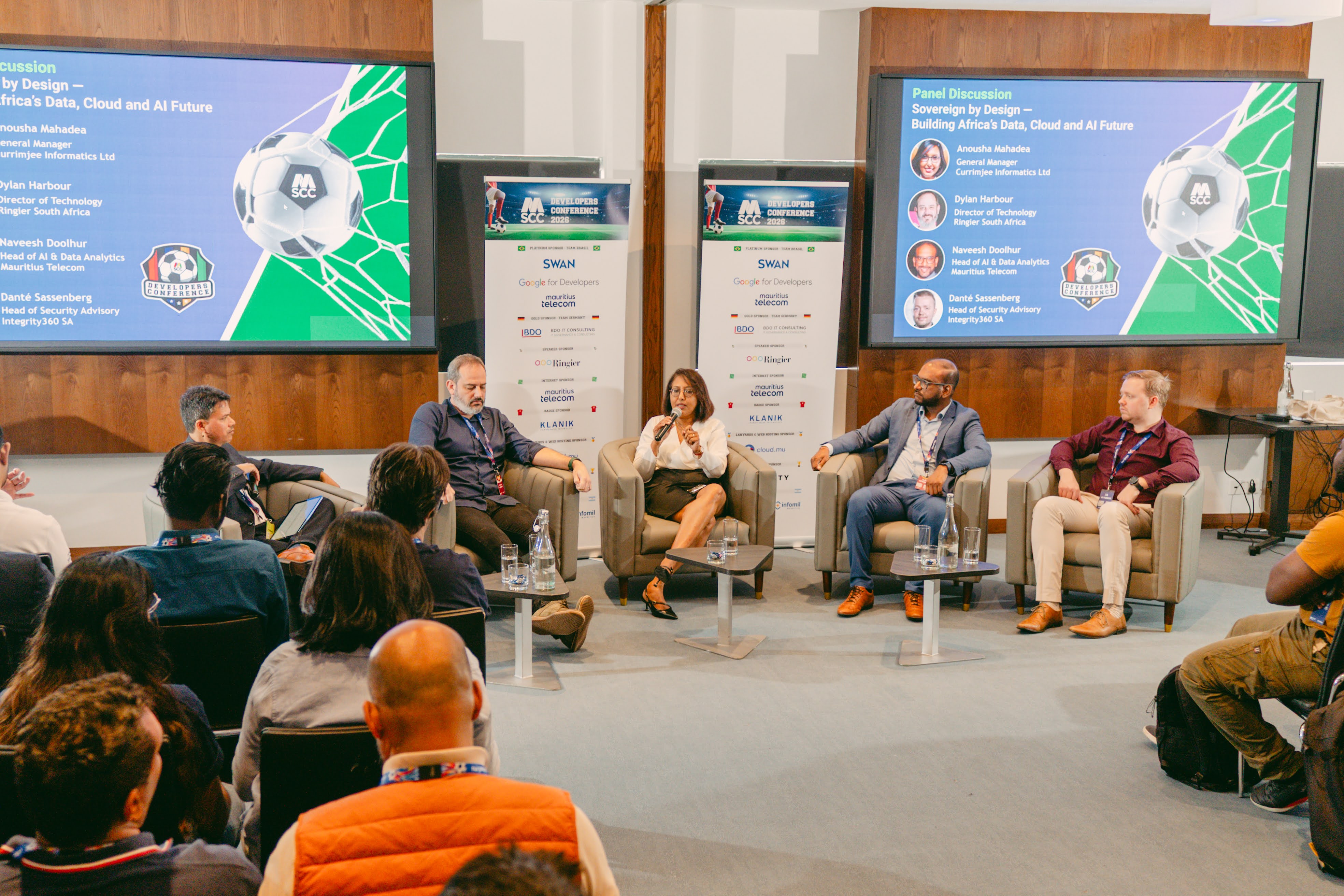
I started the panel discussion at the Developers Conference a few years ago, and I organise and moderate it every year. In previous editions we talked about Cloud-Native and about Cybersecurity. This year I picked the title "Sovereign by Design".
The title was a deliberate choice. Sovereignty is not something you declare in a strategy document. It is the result of many smaller decisions. What you build and what you buy. Whose infrastructure you depend on. Who you hire. What you leave unchecked.
We took the stage on the second morning of the conference, right after the keynote by the CEO of Mauritius Telecom. Over the next hour and a half, four panelists worked through one question. What does it actually take for Africa to own its digital future? What follows is not a transcript. These are the arguments that stayed with me.
Anousha Sathan on local talent
Anousha Sathan, General Manager of Currimjee Informatics Ltd, said the sovereignty conversation is incomplete without skilled local talent. You can bring your data home and build local data centres, and still depend on someone else, because the people who design and run those systems sit abroad.
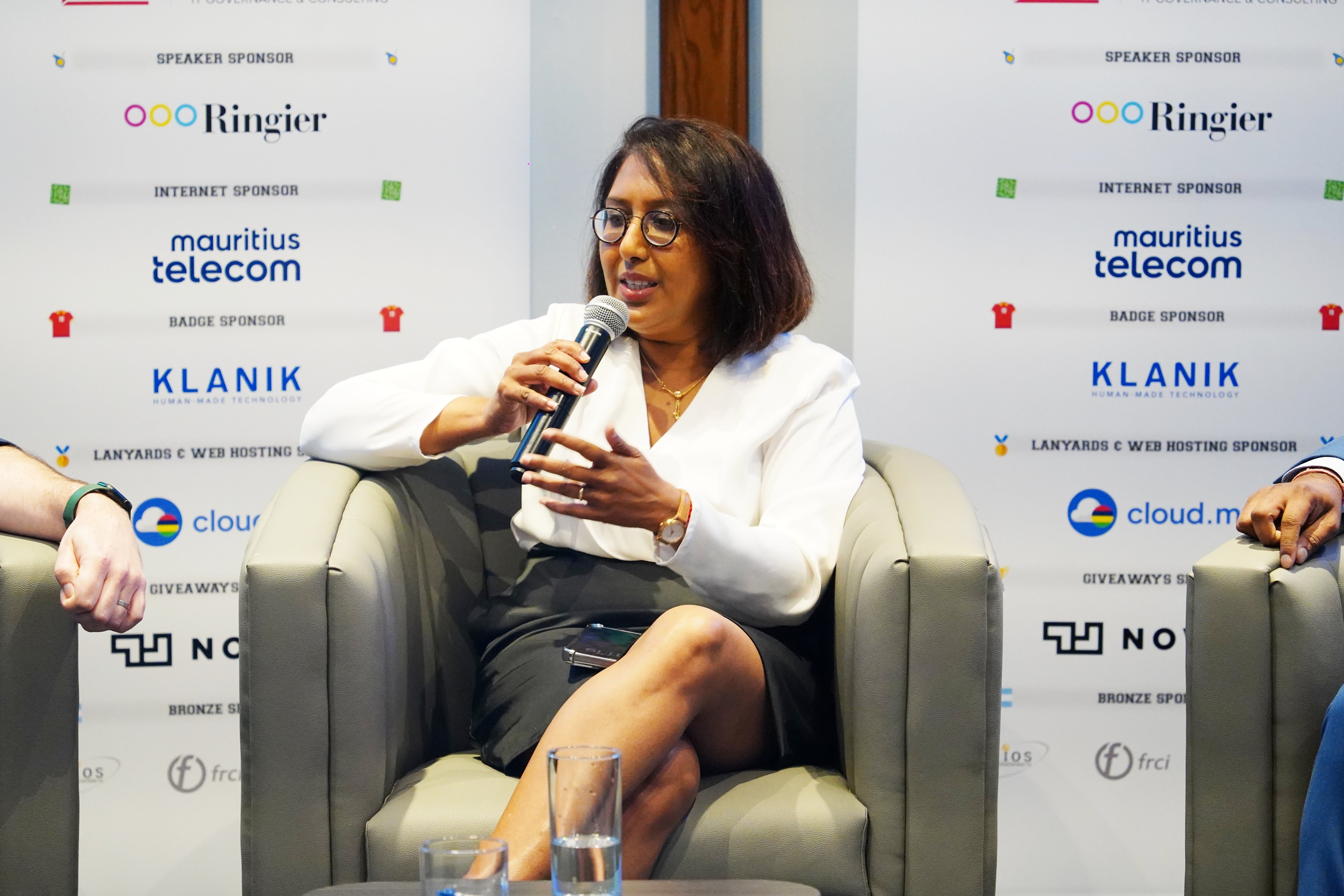
She was frank about the situation in Mauritius. Big projects often go to foreign companies, and the reason given is usually the same. There is not enough local expertise. She asked the room to see this for what it is, a vicious circle. If local talent never gets a fair chance on serious work, it never builds the track record that would win the next project, and the shortage keeps repeating itself. Breaking the circle means being willing to bet on local capability, even when the safer choice points overseas. For her, sovereignty starts with how we hire and how we award contracts.
Naveesh Doolhur on the hardware underneath
The conversation then moved to the physical layer, the cables, data centres and compute that everything else sits on. Naveesh Doolhur, Head of AI & Data Analytics at Mauritius Telecom, did not dispute the starting point. Much of the submarine fibre in the region is owned by international companies and consortia.
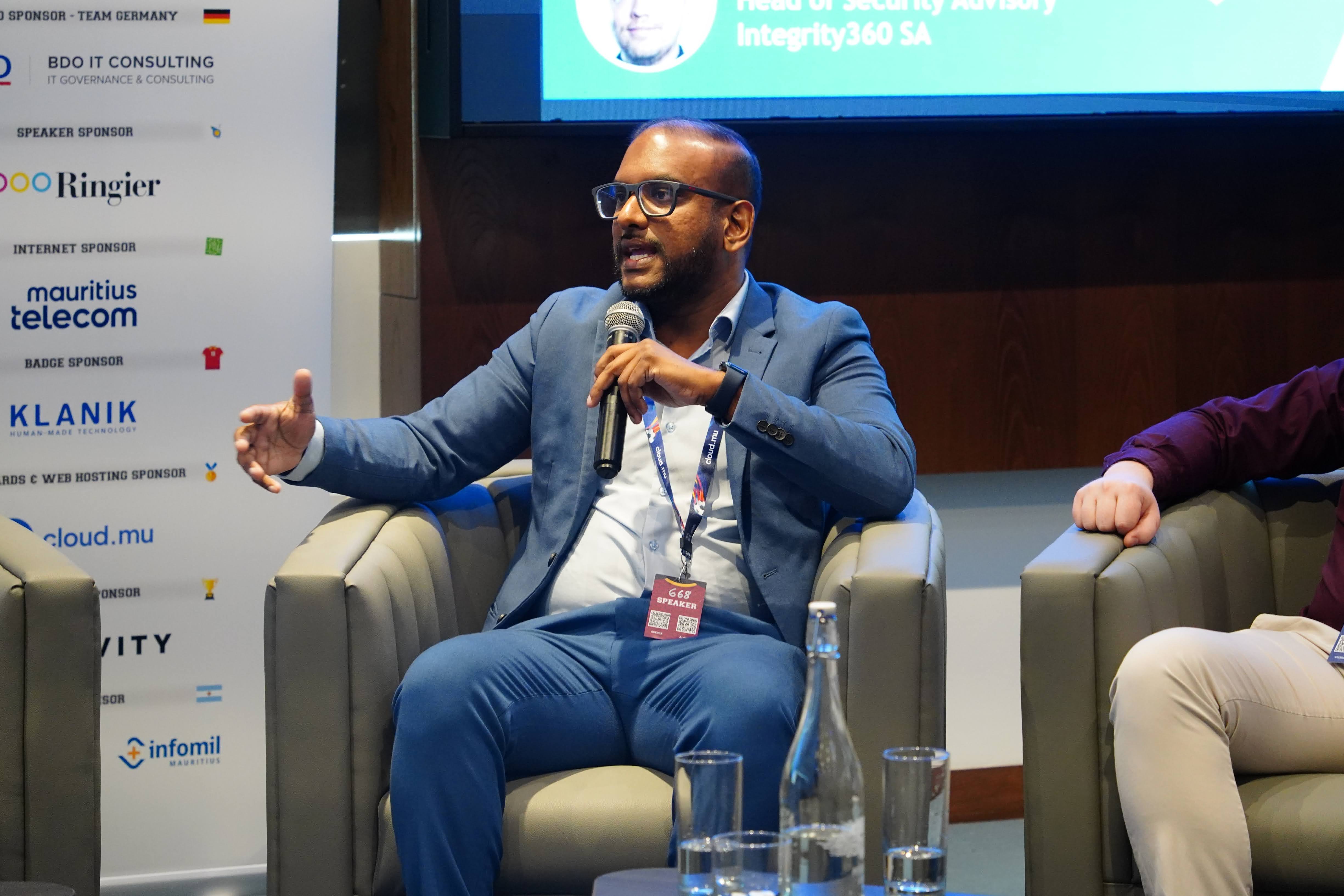
But he did not accept that nothing can change. Local ISPs have been investing, and Mauritius Telecom in particular. He pointed to MT's investment in top-tier data centre capabilities, and to its purchase of GPUs, the expensive hardware that any serious AI work now depends on. The aim is practical. Local players should have somewhere to build and host their platforms, and now to train and run models, without automatically going to a foreign hyperscaler. His point was that the work is already funded and under way.
Dylan Harbour on the gap in the models
Dylan Harbour, Director of Technology at Ringier South Africa, spoke about how AI is changing the media industry, especially the way content is created. The tools are moving fast, and newsrooms across the continent already feel the shift.
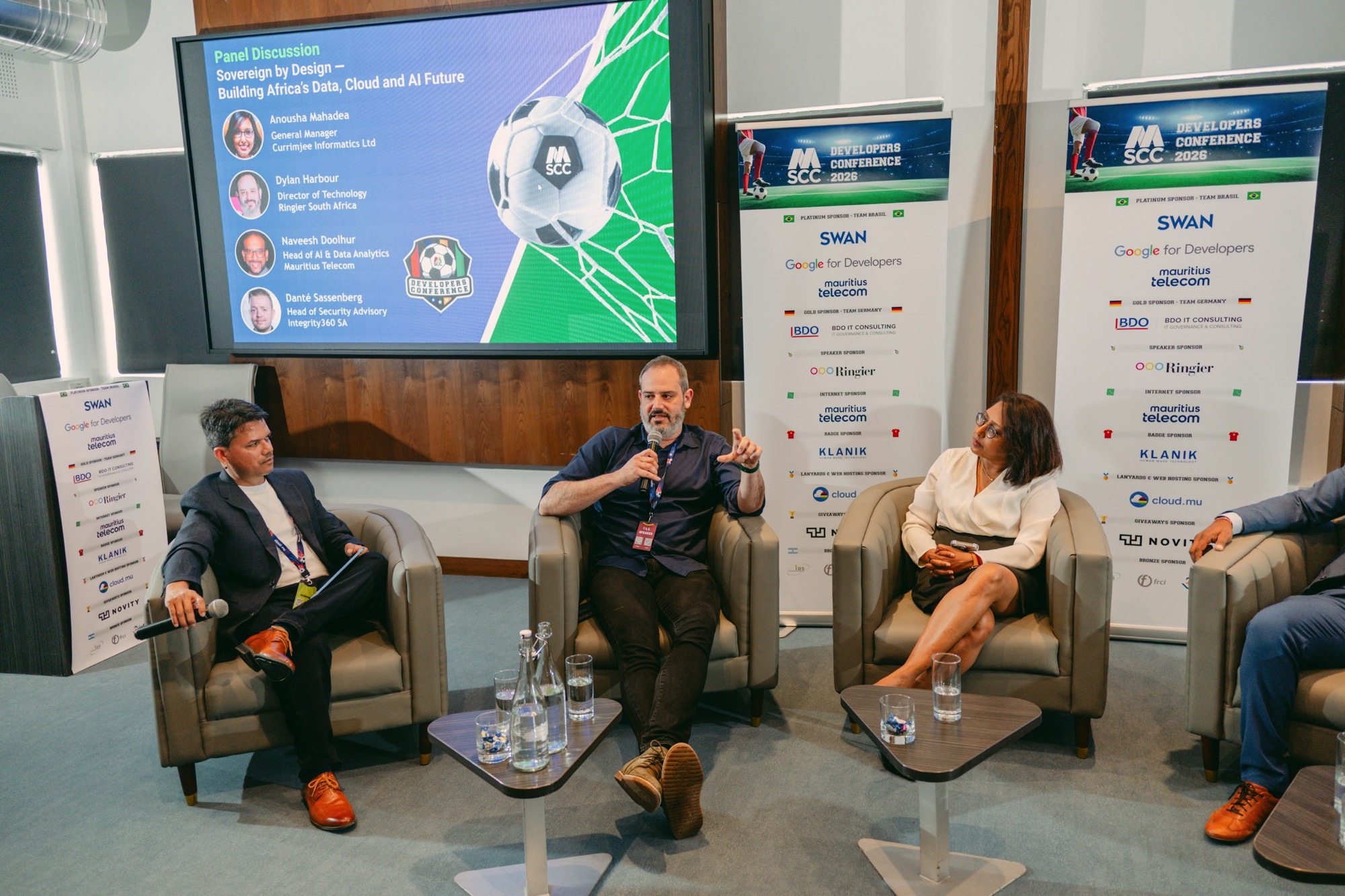
His most interesting point was about what is missing from the models, and about who holds the material to fill that gap.
It's an opening, if you're careful. The big models were trained where the payoff was biggest, so smaller languages and local context got left out. Media companies here sit on decades of content in exactly those languages and with local context, and a lot of it has never been public. The harder question is what shape the offering takes next, because whatever we build has to keep transparency and trust intact. — Dylan Harbour
African languages are missing from the big models because the money was elsewhere. The training data followed the return, and our languages were not where the return was. That gap is not permanent though. African publishers hold archives that no web crawler has ever seen, decades of reporting in local languages, much of it never published online. In a market where good data is the constraint, that is a rare asset.
His warning matters as much as the opportunity. Deciding what to do with those archives is the hard part, whether that is licensing, a partnership, a product or a shared corpus. And it has to be done without losing the transparency and trust that make a media house worth reading in the first place. Owning the data is only half of it. The other half is being careful about how you use it.
Danté Sassenberg on supply chain risk
Danté Sassenberg, Head of Pentesting at Integrity360, spoke about a threat that rarely makes the news but does a lot of damage, the supply chain. His message was simple. No weak link should be left unchecked.
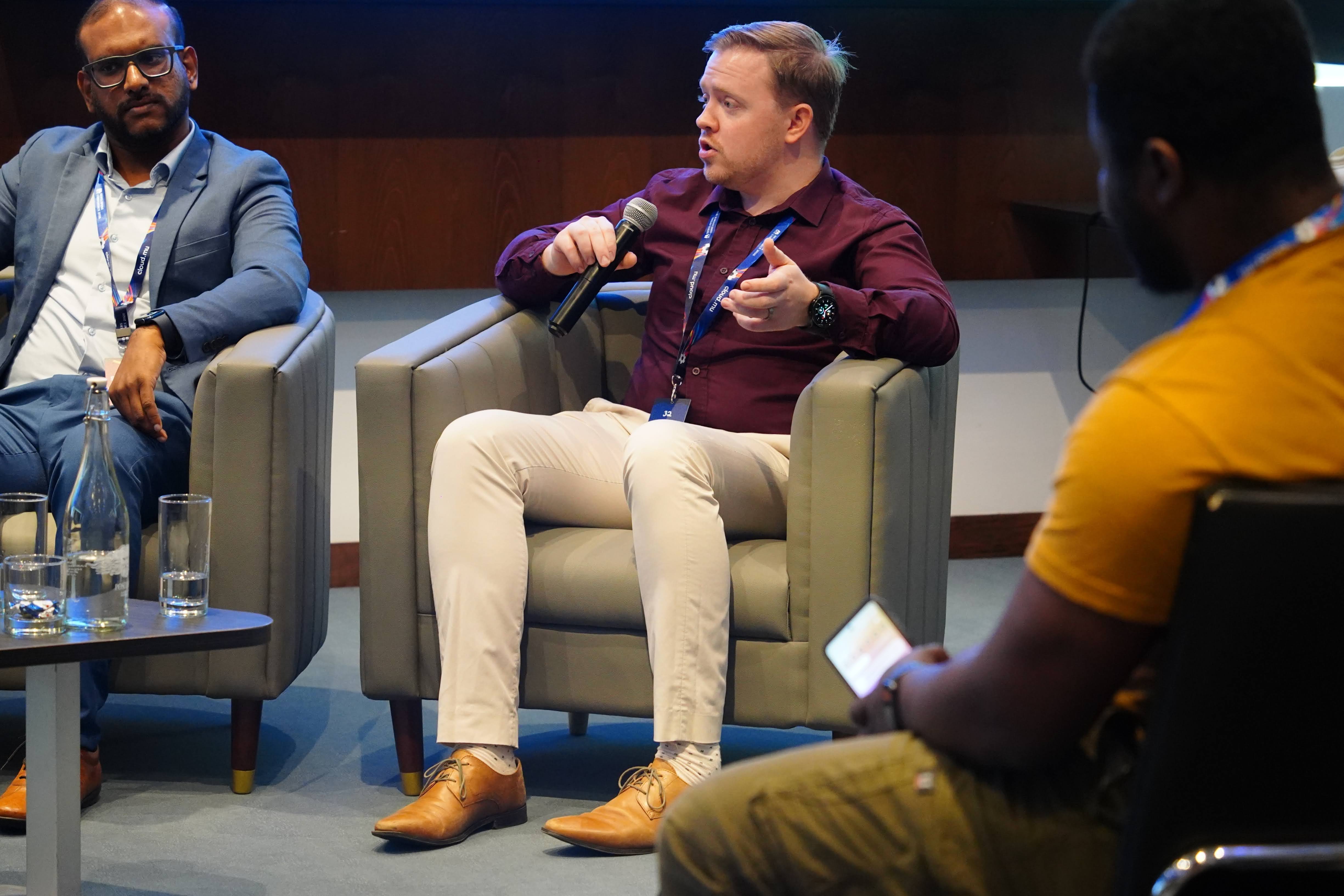
Two things make this urgent. First, AI has made attacker tools faster and cheaper than they were a year ago. Second, companies relax because they work with large, well-known vendors. That comfort is understandable, but it hides the real exposure. A third-party dependency, a library, a plugin or a supplier's integration quietly becomes the softest point in a system that looks well protected. Trusting a big name at the front door counts for little if the breach comes through a forgotten link further down the chain. For him, sovereignty includes knowing your dependencies well enough to defend them.
Conclusion
Four panelists, four points of view, and one common thread. Talent, infrastructure, data and dependencies are not competing definitions of sovereignty. They are the walls that hold it up. Take one away and the structure leans.
If there was a single lesson, it was this. Sovereignty is not a status you announce. It is a set of decisions you make, again and again, and usually against the easier option. The safe procurement choice, the foreign hyperscaler, the trusted vendor, the well-resourced language. Each one is the default, and each default gives away a little ground. Building differently is harder. That is what doing it by design actually means.
My thanks to Anousha, Dylan, Danté and Naveesh for a solid hour and a half of discussion, and to everyone who stayed in the room to be part of it.